
Existing patients can conveniently reorder eligible contact lenses online whenever they need them.
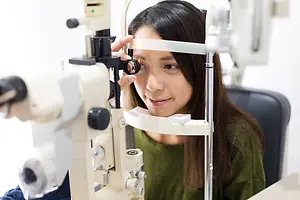
If Your Contact Lenses Feel Uncomfortable by Midday, the Fit May Not Be Right
Contact Lens Exams in San Antonio
Your Lenses Online
Lauren Alexander Vision Source at Shavano Park
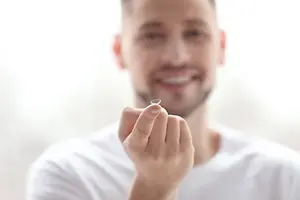
Dryness, Blurring, and End-of-Day Discomfort Are Not Normal
Many patients accept discomfort as the cost of wearing contact lenses. Lenses that feel dry after a few hours, shift with every blink, or cause redness at the end of the day are telling you something—the fit, material, or replacement schedule may not be right for your eyes.
A contact lens evaluation gives your eye doctor the measurements and trial data needed to identify exactly what is causing the problem and recommend lenses that remain comfortable from morning until night. For most patients, the right lens does not feel like anything at all.
What Your Contact Lens Exam Looks At
Contact lenses require their own prescription, separate from your glasses, because they sit directly on the surface of your eye. Getting that prescription right involves more than reading a chart.
During your evaluation, your eye doctor measures:
- The curvature and shape of your cornea
- The health and stability of your tear film
- How a trial lens fits, centers, and moves with each blink
- The clarity of your vision with the lens in place
- Your daily routine and how you use your vision
Each measurement helps build a prescription matched to your eyes—not just your vision.
A standard eye exam measures your vision and evaluates eye health to determine your glasses prescription. A contact lens exam goes further; it includes corneal measurements, a tear film evaluation, and a trial lens fitting to assess how a lens performs on your eye. Contact lenses require their own prescription separate from your glasses prescription, even if your glasses prescription has not changed.
Contact lens prescriptions typically expire after one year. Even if your vision feels the same, an annual evaluation ensures your lenses continue to fit properly and support your eye health. Changes in your tear film, corneal shape, or prescription can all affect how your lenses perform over time.
Many patients with dry eye can still wear contact lenses comfortably, but the right approach depends on understanding the cause of their symptoms. Treating dry eye before or alongside contact lens wear often improves comfort significantly. For some patients, specialty lenses such as scleral lenses — which maintain a reservoir of fluid between the lens and the eye—offer a much more comfortable experience than traditional soft lenses.
Yes. MiSight daily disposable contact lenses and orthokeratology (ortho-k) lenses are clinically supported options for slowing myopia progression in children. A contact lens exam determines whether your child is a good candidate and includes measurements specific to these lens types. Both options are available at our locations.
Bring your current glasses and, if you wear contacts, your existing lens boxes or the brand and prescription details. If you have had a recent eye exam elsewhere, bringing those records helps your doctor compare measurements. Let the front desk know in advance if you are interested in specialty lenses, myopia management, or if you experience dry eye symptoms.
Dry eye is one of the most common reasons patients struggle with contact lens comfort and one of the most overlooked. If your lenses feel dry within a few hours, cause burning or redness, or become unwearable by afternoon, the lens itself may not be the problem.
Identifying and treating the underlying cause of dry eye often restores comfortable lens wear without needing to abandon contacts entirely. For patients with more significant dry eye, specialty lenses such as scleral lenses can provide sustained comfort that standard soft lenses cannot.
Standard soft lenses work well for most patients, but not all. Patients with keratoconus, irregular corneas, high prescriptions, or significant dry eye often see and feel dramatically better in a specialty lens design.
Lauren Alexander Vision Source offers scleral lenses, RGP lenses, MiSight lenses for myopia management, and orthokeratology (ortho-k) lenses worn overnight that reshape the cornea so patients can see clearly during the day without any lenses at all. Each of these requires a dedicated fitting with additional measurements and follow-up visits to confirm the lens is performing as intended.
Your First Contact Lens Fitting
If you have never worn contact lenses before, the exam does more than measure your eyes. It determines which lens design, material, and replacement schedule suits your lifestyle and tear film. You will leave knowing how to insert, remove, and care for your lenses and confident that the lenses you are wearing were chosen specifically for your eyes, not simply assigned based on your glasses prescription.
Updating an Existing Prescription
Even if your vision feels unchanged, the contact lenses you wore last year may no longer be the best option for your eyes today. Subtle shifts in your corneal shape, tear film, or prescription can affect how lenses perform and how healthy your eyes remain while wearing them. An annual evaluation catches those changes early before discomfort, dryness, or reduced clarity become your signal that something is off.
A Contact Lens Exam Protects More Than Your Vision
Wearing a contact lens that does not fit correctly can cause corneal irritation, reduced oxygen flow, and chronic discomfort often without obvious warning signs. A dedicated contact lens exam evaluates the shape of your cornea, your tear film, and how a trial lens moves with every blink. This gives your doctor the information needed to recommend lenses that feel comfortable all day and keep your eyes healthy over time.
Whether you are being fitted for the first time, switching from glasses, dealing with lenses that have never felt quite right, or exploring specialty options for a more complex prescription, our team at Shavano Park and Potranco has the experience to find what works for you.
A contact lens evaluation is the first step. Schedule yours today and leave with lenses chosen for your eyes, your lifestyle, and your long-term eye health.